

Canto de Ossanha
🪘 A Song with a Spell
“Canto de Ossanha” was part of the groundbreaking Afro-Sambas project, where Baden Powell’s guitar mastery met Vinicius de Moraes’ poetic mysticism. It draws directly from Afro-Brazilian rhythms, particularly the ijexá rhythm used in sacred Candomblé ceremonies, but it also carries the harmonic richness of jazz and bossa nova.
To understand the title, we first turn to Candomblé, an Afro-Brazilian religion deeply rooted in Yoruba tradition. Ossain (also spelled Ossanha or Osanyin) is the orixá of sacred herbs, healing, and spiritual knowledge. In Candomblé, every orixá governs aspects of nature and human experience. Ossain governs the forest and the power of plants, making him a guardian of health, wisdom, and ritual clarity. The song doesn’t just mention Ossain — it invokes his wisdom in the face of human foolishness. The lyrics describe men and women who say they give, go, or love — but in truth, do not. The song becomes a warning against superficiality, emotional manipulation, and the illusion of control.
The word “canto” means “song” or “chant”, so “Canto de Ossanha” is literally “The Song (or Chant) of Ossain” — a spiritual invocation.
Yoruba Spiritual Tradition
The Yoruba spiritual tradition—rooted in the historic Yoruba homelands of southwestern Nigeria (with communities in Benin and Togo) and centered on the sacred city of Ilé-Ifẹ̀, mythically founded by Odùduwà—revolves around Olódùmarè (creator) and a pantheon of òrìṣà who mediate natural and human forces. Core ideas include òrì (personal destiny), àṣẹ (vital, activating power), and cultivating ìwà pẹ̀lẹ́ (good character), with guidance sought through Ifá divination. Worship blends chant, drumming, dance, offerings, and Egúngún (ancestral veneration), where devotees may experience orìṣà possession. Through the Atlantic slave trade, Yoruba religion spread across the Americas, deeply shaping Candomblé (Brazil), Lukumí/Santería (Cuba), and related traditions while retaining its Ifẹ̀-centered cosmology.
Candomblé & the ijexá rhythm
In Candomblé, ijexá is a ceremonial toque (rhythmic pattern) played on the atabaque drums (rum, rumpi, lê) with agogô and xequerê to accompany chants and dances for the orixás, especially Oxum and Iemanjá. Its flowing, syncopated 4/4 groove guides processions, supports trance/possession, and shapes call-and-response singing. Through afoxé groups and Bahia’s Carnival, ijexá moved from the terreiro to the street and into Brazilian popular music—where artists borrow its lilt to evoke Candomblé’s spiritual atmosphere, as in pieces like “Canto de Ossanha.”
🎤 Lyrics: The Voice of the Orixá
Here’s a key excerpt from the original Portuguese lyrics:

O homem que diz “dou” não dá
Porque quem dá mesmo não diz
O homem que diz “vou” não vai
Porque quando foi já não quis
And its translation:
The man who says “I give” doesn’t give
Because the one who truly gives doesn’t say it. The man who says “I’m going” doesn’t go Because when he went, he no longer wanted to
The song concludes with repeated pleas:
“Eu peço a Ossanha para ele se mandar!” — (I ask Ossanha to make him go away!)
This repeated chant acts like a spiritual cleansing, calling upon the orixá to dispel inauthenticity and protect the speaker.
🎸 Musical Structure
The standard chart for this song:
Dm7 → Dm/F → E7 → Ebmaj7 → (back to) Dm7, often in Drop-D so the bass walks along the 6-string of the guitar, D→ F → E → Eb → D.
- Tonic area (Dm7, Dm/F): this is the “home” sound. Players often color it D Dorian (D E F G A B C) by slipping B natural into voicings/lines (e.g., Dm6/Dm13)—that’s the Dorian fingerprint (minor with a natural 6). (Tonic: Dm7 = D–F–A–C)
- E7: a secondary dominant (V of V) / color dominant—outside strict Dorian—injecting tension via G# before the side-step. Color dominant: E7 = E–G#–B–D
- Ebmaj7: a chromatic bIImaj7 (Neapolitan-ish) neighbor that resolves back to Dm; it’s a dramatic color common in Afro-samba writing. Chromatic neighbor: E♭maj7 = E♭–G–B♭–D ← this is ♭IImaj7
🎸 Meter & Feel
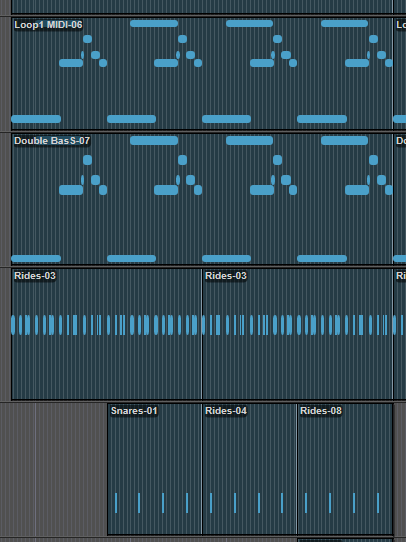
Rhythm is 4/4 with an ijexá (afoxé)–derived groove—steady, processional, and gently syncopated. Eighth notes are mostly straight (not swung), but the phrasing has a lilting, forward push. Baden Powell used a percussive, fingerstyle approach — The thumb lays a repeating bass ostinato (often the open low D in Drop-D), while the fingers add off-beat chord pops and ghost strokes—so the guitar behaves like drum + harmony.
✨ Musical & Cultural Legacy
“Canto de Ossanha” represents a flagship of Baden Powell & Vinicius de Moraes’s Afro-Sambas, fusing Candomblé ijexá groove with bossa/jazz harmony. Frequently covered by a wide array of artists (Elis Regina, Sérgio Mendes, Toquinho, Jurassic5), its influence reaches into jazz, classical guitar, samba, and beyond. Beyond its musical legacy, it remains a cultural artifact — a bridge between West African spiritualism, Brazilian identity, and global art music.
- Spiritual visibility: It brought Candomblé imagery (invoking Ossain/Ossanha) into mainstream art music, helping normalize Afro-Brazilian religious references in popular culture.
- Diasporic bridge: The song embodies the Atlantic dialogue—West African spiritual roots refracted through Brazilian identity and exported globally.
- Icon of syncretism: Its blend of sacred rhythm with modern harmony is a touchstone for conversations about race, religion, and cultural hybridity in Brazil.
- Enduring relevance: New renditions keep recontextualizing it—concert hall, jazz club, classroom—so it remains both a ritual echo and a modern standard.
Final Thoughts
“Canto de Ossanha” endures because it marries a hypnotic, percussive pulse to sophisticated harmony while carrying living Afro-Brazilian spirituality into the heart of popular music.
This post includes content generated in collaboration with ChatGPT 5.0 (OpenAI, August 2025).
Further Reading and References
- Britannica — Vinícius de Moraes (bio & context). Solid overview of his life and role in bossa nova/MPB. Encyclopedia Britannica
- Official site — Vinícius de Moraes (biography). Primary source with career timeline and works. viniciusdemoraes.com.br
- “Os Afro-Sambas” (1966) — album entry. Background on the Powell/De Moraes collaboration that includes “Canto de Ossanha.” Wikipedia
- Ọ̀sanyìn / Ossain (orixá of herbs & healing). Background on the deity invoked in the song; useful for cultural notes. WikipediaDurham e-Theses
- Afoxé & ijexá rhythm. Clear explanation of ijexá as the foundational groove of afoxé and its Candomblé roots. Wikipedia
- Candomblé musical practice (instruments, axé concept). Ethnomusicology-focused article on sacred rhythms and ritual context. soundsandcolours.com

 Random Observations from the Universe
Leave a comment